Korean Bibimbap
Uitgelicht onder: Recepten voor moderne wereldgerechten
Korean Bibimbap is a vibrant and flavorful dish that combines rice with a variety of vegetables, protein, and a spicy sauce, making it a delightful meal that's both nutritious and satisfying.
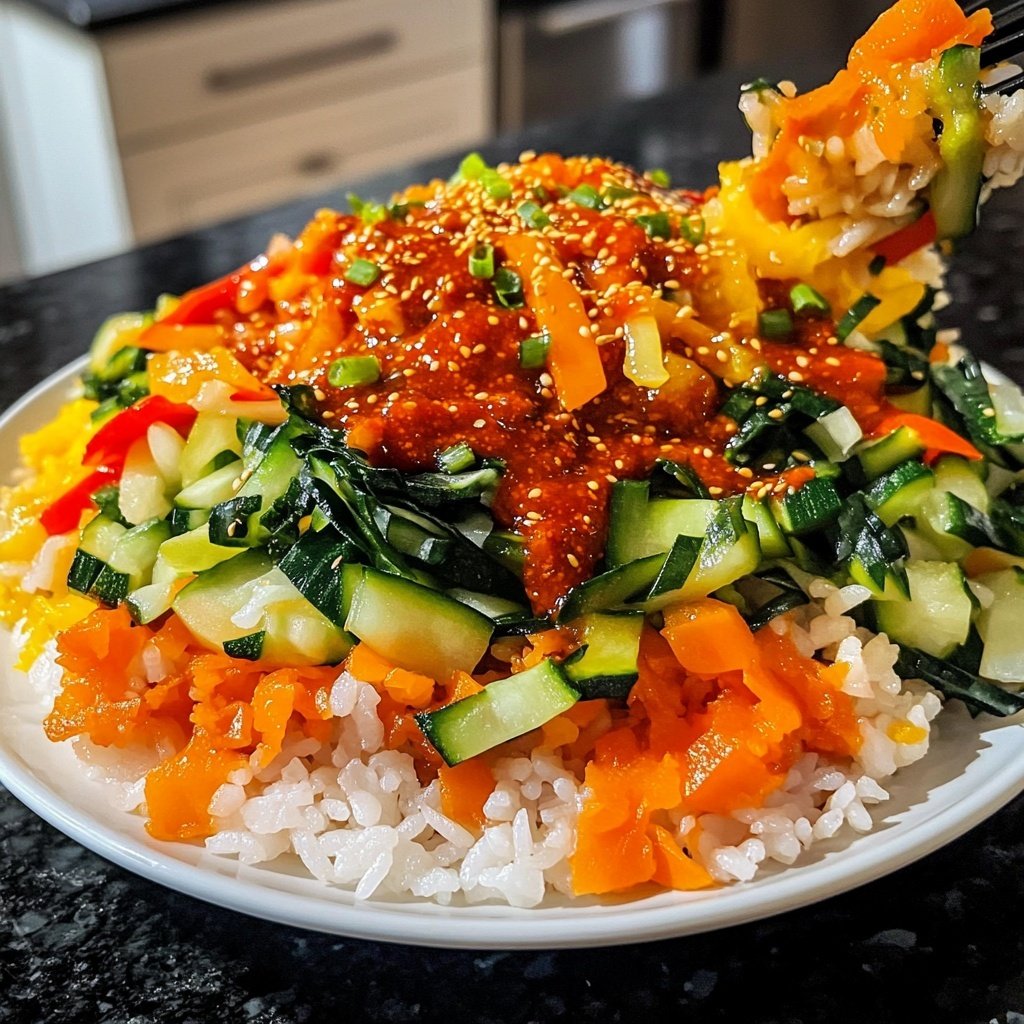
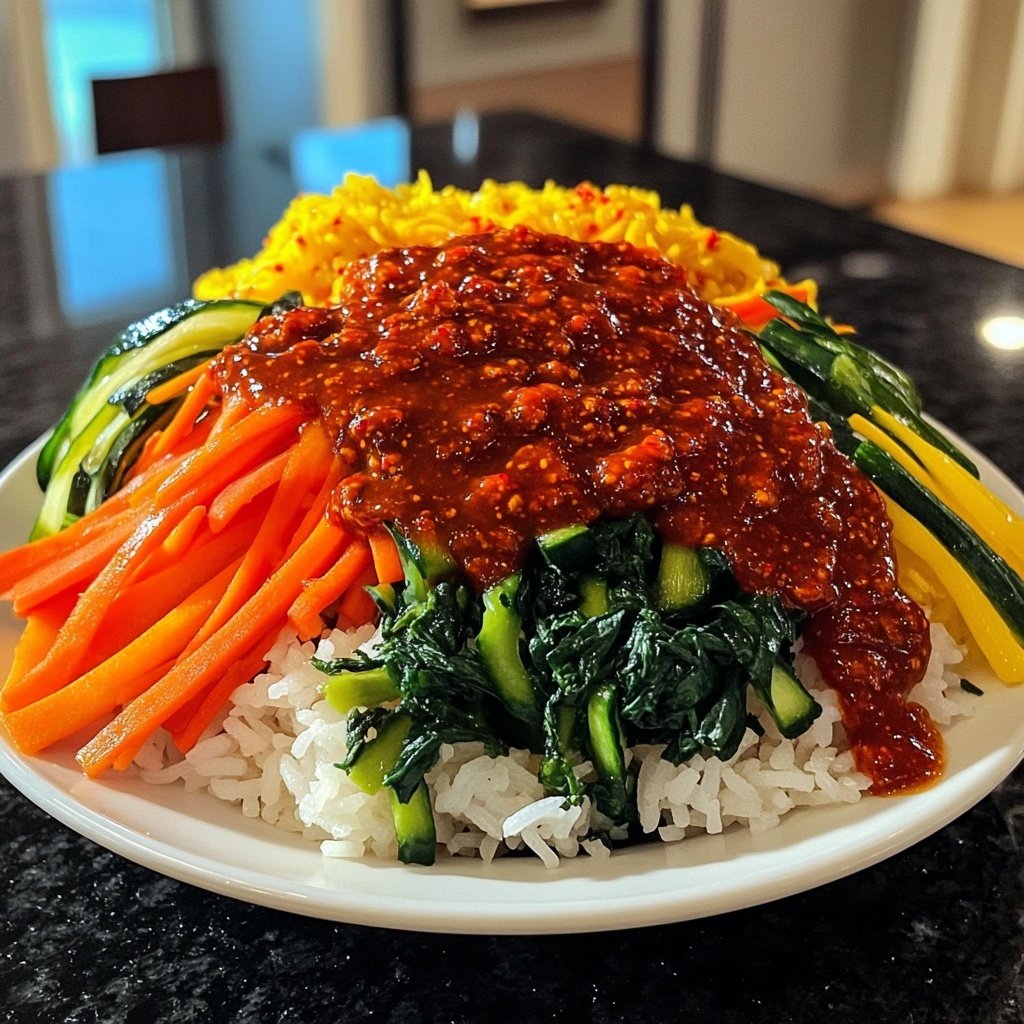
This traditional Korean dish, bibimbap, translates to 'mixed rice' and is known for its beautiful presentation. Each ingredient is carefully prepared and arranged on top of the rice, allowing for a delightful dining experience as you mix everything together.
Why You Will Love This Recipe
- A colorful array of fresh vegetables adds nutrition and crunch
- Customizable with your favorite proteins, from tofu to beef
- The gochujang sauce gives it a perfect spicy kick
The Art of Bibimbap
Bibimbap, which translates to 'mixed rice,' is more than just a meal; it’s a culinary experience that showcases the essence of Korean cuisine. The dish is characterized by its vibrant colors and diverse textures, making it visually appealing and nutritious. Each ingredient contributes not only to the flavor but also to a balanced meal, with fresh vegetables, protein, and carbohydrates all coming together in harmony.
Traditionally served in a hot stone bowl, bibimbap is meant to be mixed just before eating, allowing the flavors to meld beautifully. The sizzling sound of the stone bowl adds an exciting element to the dining experience. However, you can easily enjoy this dish at home without the stone bowl, and it will still be just as delicious and fulfilling.
Personalize Your Bibimbap
One of the best aspects of bibimbap is its versatility. You can customize it according to your dietary preferences and the ingredients you have on hand. Whether you prefer tofu for a vegetarian option, beef for a hearty meal, or even seafood, the choice is yours. The vibrant array of vegetables can also be swapped out based on seasonal availability or personal taste, ensuring that each bowl is uniquely yours.
Additionally, you can adjust the level of spiciness by modifying the amount of gochujang sauce you use. For those who enjoy a milder flavor, consider adding less sauce or mixing it with a bit of sesame oil to create a more mellow taste. This adaptability makes bibimbap a popular choice for gatherings, allowing everyone to create their ideal bowl.
Health Benefits of Bibimbap
Korean bibimbap is not only delicious but also packed with nutrients. The dish features a variety of vegetables, each bringing its own set of vitamins and minerals. Spinach is rich in iron, carrots provide beta-carotene, and mushrooms offer antioxidants, making this meal a powerhouse of nutrition. The inclusion of protein, whether from eggs, tofu, or meat, ensures that you feel satisfied without compromising on health.
Moreover, the use of gochujang adds more than just heat; it also contains health benefits. Made from fermented ingredients, gochujang can aid digestion and boost metabolism. The balance of ingredients in bibimbap supports a healthy lifestyle, making it a great option for anyone looking to enjoy a nutritious and flavorful meal.
Ingredients
For the Bibimbap
- 2 cups cooked short-grain rice
- 1 cup spinach, blanched
- 1 cup carrots, julienned
- 1 cup zucchini, julienned
- 1 cup mushrooms, sliced
- 4 eggs
- 1 cup bean sprouts, blanched
- 1 tablespoon sesame oil
- Salt to taste
For the Gochujang Sauce
- 3 tablespoons gochujang (Korean chili paste)
- 1 tablespoon sesame oil
- 1 tablespoon sugar
- 1 tablespoon rice vinegar
- 1 teaspoon minced garlic
Mix the ingredients well before serving for the best flavor!
Instructions
Prepare the Vegetables
In a skillet, heat sesame oil over medium heat. Sauté each vegetable separately (spinach, carrots, zucchini, mushrooms) until tender, seasoning with a pinch of salt. Remove from heat and set aside.
Cook the Eggs
In the same skillet, fry the eggs sunny-side up or to your preferred doneness. Set aside.
Make the Gochujang Sauce
In a small bowl, whisk together gochujang, sesame oil, sugar, rice vinegar, and minced garlic until smooth.
Assemble the Bibimbap
In bowls, place a serving of rice at the bottom. Arrange the sautéed vegetables, bean sprouts, and fried egg on top. Drizzle with gochujang sauce and serve.
Mix everything together in the bowl before enjoying!
Professionele Tips
- Feel free to customize your bibimbap with different vegetables or proteins like beef, chicken, or tofu. For a vegetarian version, skip the egg or replace it with a scrambled tofu.
Tips for Perfecting Your Bibimbap
To achieve the best texture for your rice, use short-grain rice as it is stickier than long-grain varieties. This stickiness allows the rice to hold together well when mixed with other ingredients. Additionally, make sure to cook the rice properly; undercooked rice can lead to a less enjoyable eating experience.
When sautéing the vegetables, keep the heat at medium to prevent burning while ensuring they become tender. Each vegetable should be cooked separately to preserve their individual flavors and textures. This step may take a little extra time, but it’s worth the effort for a more vibrant and flavorful bibimbap.
Serving Suggestions
Bibimbap is typically served as a standalone dish, but it can also be accompanied by a side of kimchi or pickled vegetables to enhance the meal. These sides add an extra layer of flavor and a probiotic boost, making your meal even healthier.
For a complete experience, consider pairing your bibimbap with a refreshing Korean beverage, such as barley tea or a light soju. These drinks complement the dish beautifully and can elevate your dining experience, whether you're enjoying a quiet night in or hosting friends.
Vragen Over Recepten
→ Can I make bibimbap vegetarian?
Absolutely! Just omit the egg or replace it with scrambled tofu, and use vegetables for protein.
→ What kind of rice is best for bibimbap?
Short-grain rice is traditional, as it has a sticky texture that holds the ingredients together.
→ Can I prepare the ingredients in advance?
Yes, you can prepare the vegetables and sauce in advance. Store them in the fridge until you're ready to assemble and serve.
→ Is gochujang spicy?
Yes, gochujang has a spicy kick, but it's balanced with sweetness. Adjust the amount according to your spice preference.
Korean Bibimbap
Gemaakt door: Harriet Bloom
Recepttype: Recepten voor moderne wereldgerechten
Vaardigheidsniveau: Intermediate
Eindportie: 4 servings
Wat je Nodig Hebt
For the Bibimbap
- 2 cups cooked short-grain rice
- 1 cup spinach, blanched
- 1 cup carrots, julienned
- 1 cup zucchini, julienned
- 1 cup mushrooms, sliced
- 4 eggs
- 1 cup bean sprouts, blanched
- 1 tablespoon sesame oil
- Salt to taste
For the Gochujang Sauce
- 3 tablespoons gochujang (Korean chili paste)
- 1 tablespoon sesame oil
- 1 tablespoon sugar
- 1 tablespoon rice vinegar
- 1 teaspoon minced garlic
Stappen
In a skillet, heat sesame oil over medium heat. Sauté each vegetable separately (spinach, carrots, zucchini, mushrooms) until tender, seasoning with a pinch of salt. Remove from heat and set aside.
In the same skillet, fry the eggs sunny-side up or to your preferred doneness. Set aside.
In a small bowl, whisk together gochujang, sesame oil, sugar, rice vinegar, and minced garlic until smooth.
In bowls, place a serving of rice at the bottom. Arrange the sautéed vegetables, bean sprouts, and fried egg on top. Drizzle with gochujang sauce and serve.
Extra Tips
- Feel free to customize your bibimbap with different vegetables or proteins like beef, chicken, or tofu. For a vegetarian version, skip the egg or replace it with a scrambled tofu.
Voedingswaarde (Per Portie)
- Calories: 500 kcal
- Total Fat: 20g
- Saturated Fat: 4g
- Cholesterol: 210mg
- Sodium: 580mg
- Total Carbohydrates: 68g
- Dietary Fiber: 5g
- Sugars: 6g
- Protein: 14g